
Degustazioni di vino a Ravenna e dintorni


English

  • Emilia Romagna wines: the known and the unknown

    Emilia Romagna wines: the known and the unknown

    Emilia Romagna is one of Italy’s most delicious regions: you may have heard of Parmigiano Reggiano, Aceto Balsamico, Lasagna Bolognese, Piadina and Sangiovese, right? But beyond its fame lies a world of forgotten grape varieties and authentic wine traditions.

    What not everyone knows is that Emilia Romagna is technically one region but in terms of food and traditions is actually two. And don’t be surprised to listen to friendly rivalries between towns that are only 6 miles aways!

    “Romagna” is the southern part of this region, bordering with Tuscany and Marche. It’s well known for its beaches – Cervia and Milano Marittima, its night life – Rimini and Riccione, its beautiful mosaics – Ravenna but above for its King: Sangiovese wine!

    The first time we encounter the name “Sangiovese” is in an act of 1672 gathered in a State archive of the city of Faenza. Sangiovese is a chameleon wine. It can vary from very easy drinking and simple to very complex and savory. Its aroma profile of cherry, leather and violet and its tannic structure make it the perfect companion to aged cheese and red meat.

    Besides Sangiovese, other known wines of this area are Albana, Trebbiano and Pagadebit (see my latest blog post about it).

    But there are also some forgotten grapes that after the Phylloxera pest were left on aside to “rebuild” more money-making grape varieties, like Sangiovese. However, more and more these days we are rediscovering grapes like Famoso, Centesimino or Burson, mostly by accident.

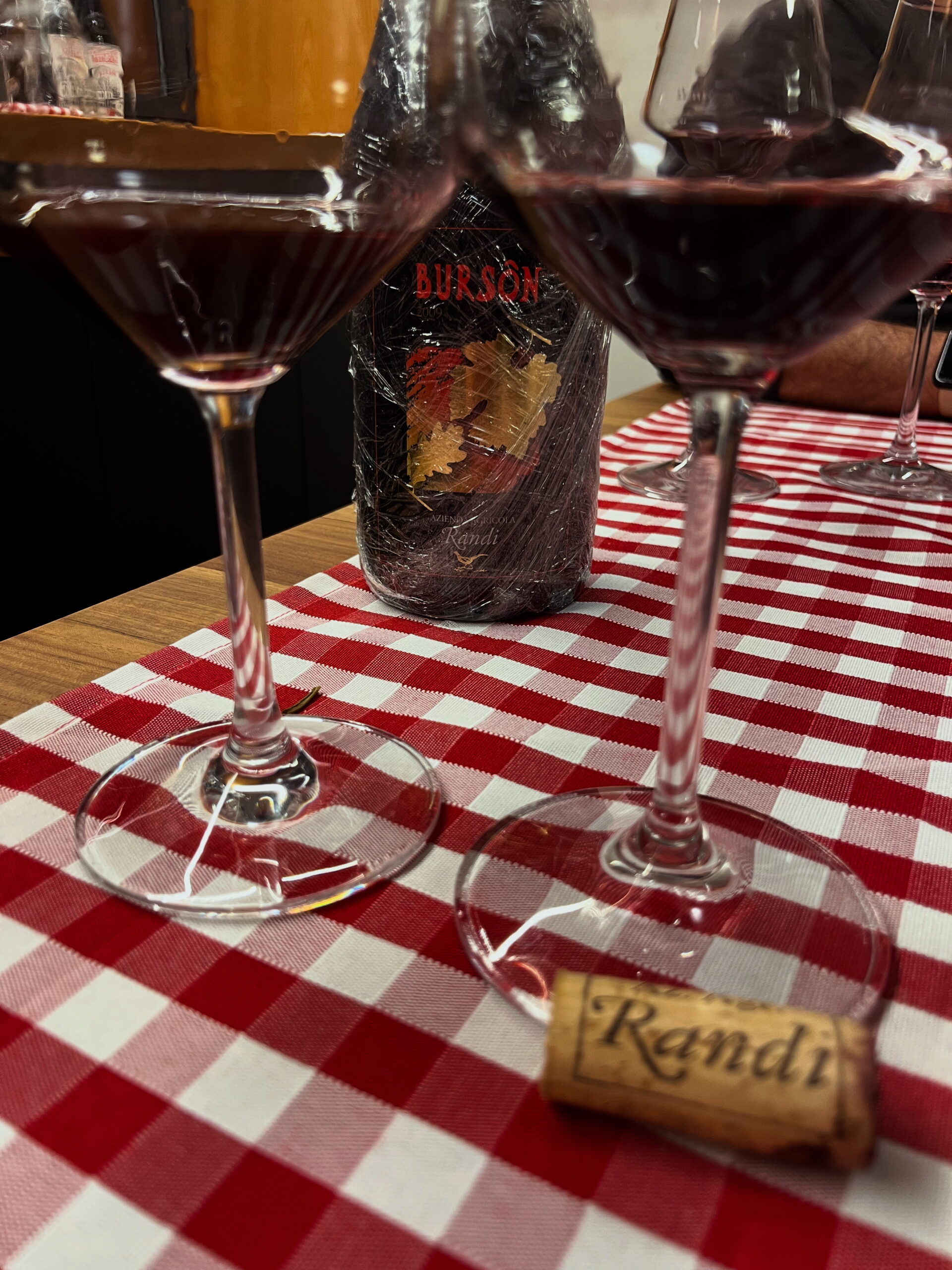
    I have recently participated in an interesting vertical tasting of Burson at Randi. We tasted 5 vintages, from 2019 to 2006.

    This grape was discovered in a wood near the city of Bagnacavallo during a hunting trip by Antonio Longanesi in 1913. This vine was literally embracing an oak and he decided to start making wine for its family. Now the Burson production is controlled by a consorzio, founded and led by Daniele Longanesi (4 th generation), to help promote and protect this rediscovered grape variety that produces very rustic and tannic wines, up to 15/16 alcohol degrees.

    If you want to dive deeper into Emilia Romagna wine experiences, check out my wine events in Ravenna or my upcoming 7-day wine trip in September 2026, co-hosted with sommelier Elisa Borelli from Balsamico Italian Kitchen in San Diego. Join us for authentic wine tastings, local food pairings, and cultural discoveries!
    Vini dell'Emilia Romagna - Burson

    [picture taken at Randi estate in Fusignano, RA, during the Burson vertical tasting]
  • Unusual grapes of Italy – my latest discoveries

    Unusual grapes of Italy – my latest discoveries

    Italy has over 400 commercial grape varieties, a true paradise for wine lovers. Beyond familiar names like Nebbiolo, Sangiovese, and Primitivo, lies a world of lesser-known treasures waiting to be discovered. Here are a few of my latest discoveries from Trentino Alto Adige to Puglia.

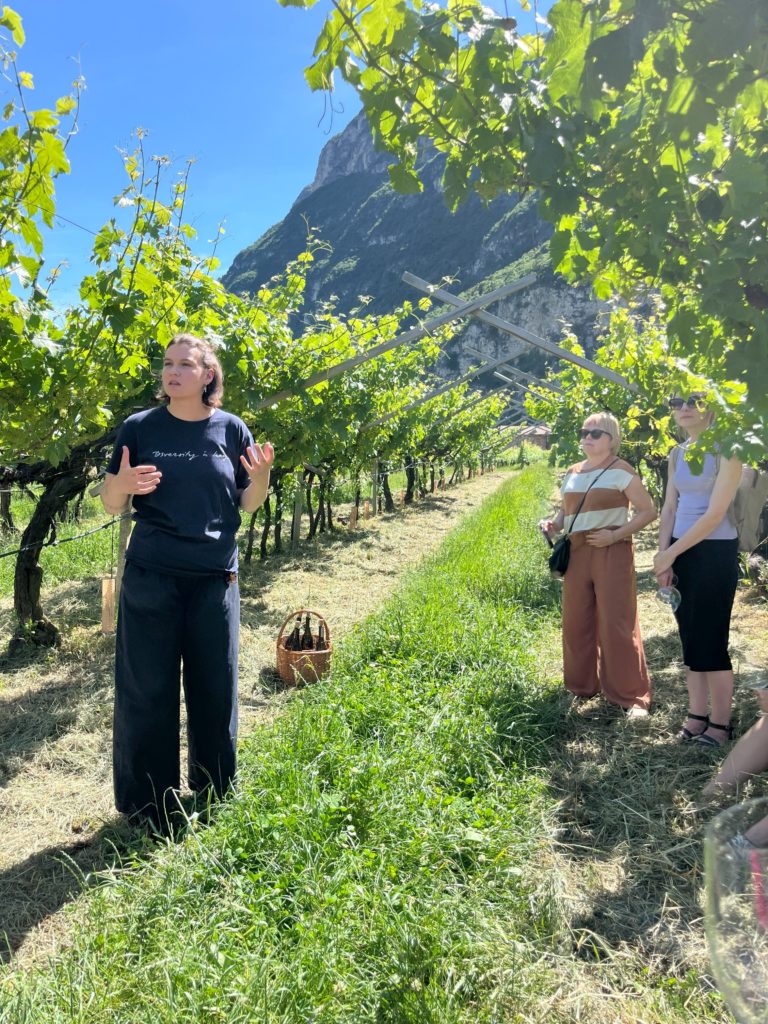
    Lagrein: this red grape is grown in the Trentino Alto Adige region, around the city of Bolzano. It’s related to Syrah and comes from a natural cross between Teroldego and another indigenous grape variety of the area.

    [picture taken during the guided tour at Tenuta Alois Lageder]

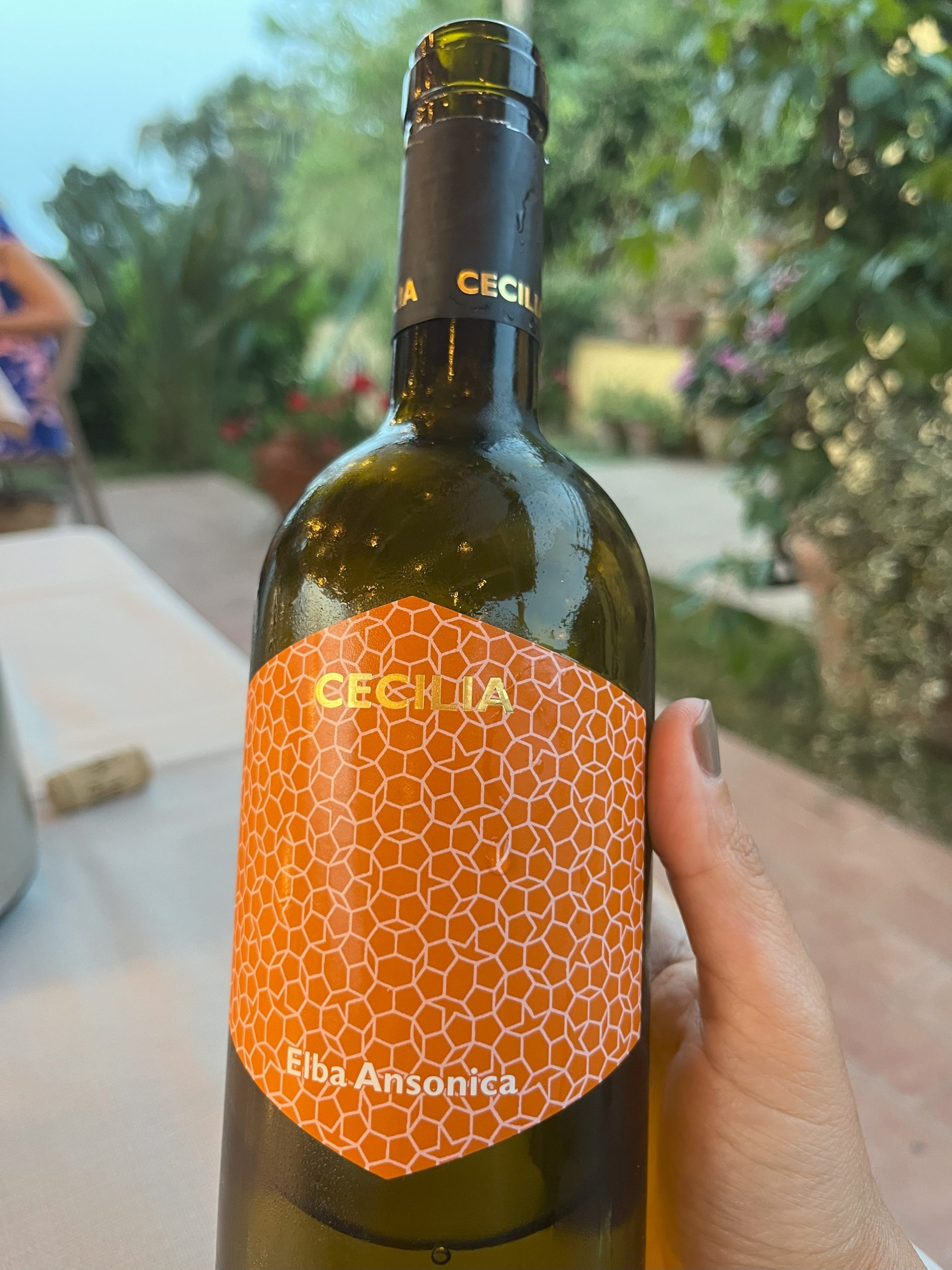
    Ansonica:I have discovered this grape while dining on a beautiful terrace at Isola d’Elba. I have asked the server of Koala restaurant a wine to pair with my fish dish and he offered this bottle of Elba Ansonica.

    Ansonica is a white variety that grows both on Isola d’Elba and on other Italian island: Sicily. Here it takes the name of Inzolia. Funny enough, the first time I drank a wine made with Inzolia grape I was not in Sicily but in Valle de Guadalupe, Mexico, where this wine is produced by the Sicilian Paolo Paoloni at his Montefiori estate.

    Ansonica/Inzolia grape is low in acidy, has a decent body with aromas of white flowers and tropical fruits.

    Bombino bianco: I came across this wine during an event in Rimini. The name of the DOC is very funny: Romagna Pagadebit (pay debts). In fact, this grape is so prolific that it was used to pay debts in the past. This wine is very entry level, like a table wine. Has a bright acidity and a green aroma profile.

    Emilia Romagna has dozens of grape varieties and wine styles. If you are interested in knowing more about one the richest culinary region of Italy don’t miss the “Emilia Romagna Food and Wine Masterclass” on July 20th promoted by our friends of Balsamico Italian Kitchen in San Diego.

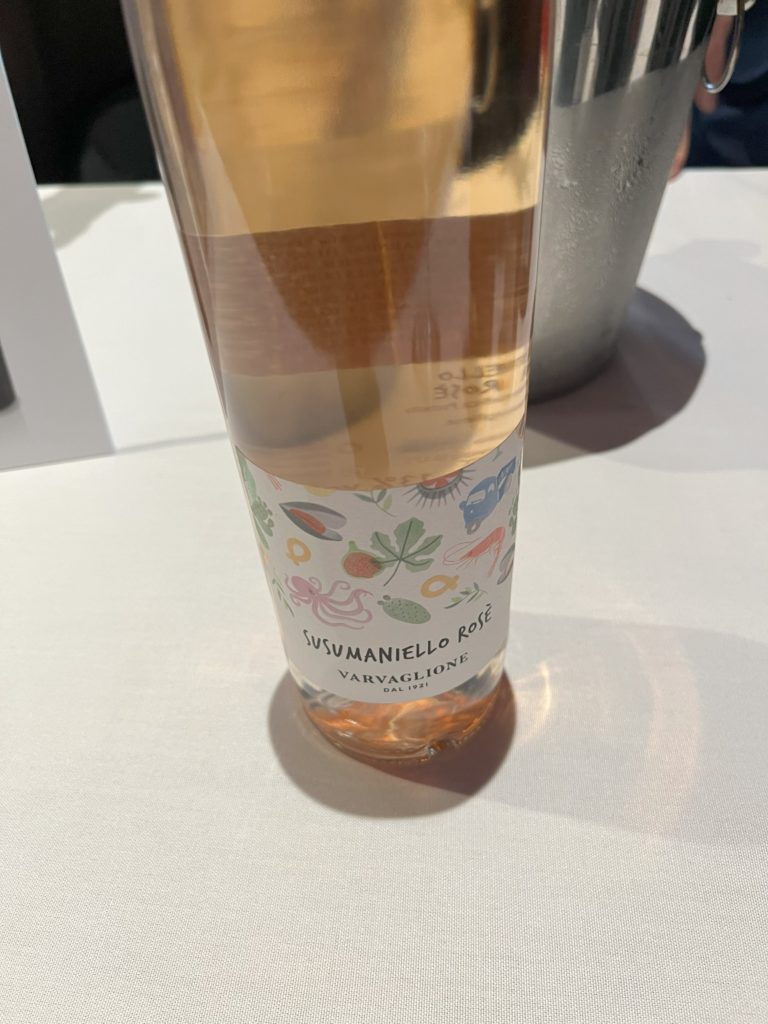
    Susumaniello: native red grape from the province of Brindisi, Puglia, Susumaniello produces full body and high alcohol wines with structured tannins and intense fruit forward aromas. In the past, it was only used for blends. Now producers have rediscovered it and they have started making single variety red and rose’ wines with it.

    I tasted my first Susumaniello rose’ at the Gambero Rosso tasting in Los Angeles last year and this wine, a 2022 wine produced by the 100 year old family estate Varvaglione, received Tre Bicchieri in the 2024 Gambero Rosso Italian Wine Guide. Susumaniello is very pleasant with floral and pomegranate notes. I can’t wait for my next trip to Sicily to taste it on the territory!

    [picture taken at Gambero Rosso in Los Angeles in 2022]

    If you want to learn more about these grape varieties and taste them in a welcoming and authentic setting, join our food events in Ravenna. Find out more at sipwithcarlotta.com.

  • Carménère is alive!

    Carménère is alive!

    Imagine the surprise of Chilean winemakers when, after decades of labeling Carménère grapes as Merlot, they discovered the truth! The story of Carménère in Chile is one of the most fascinating tales in the world of wine.
    It starts with a mistake. Brought by European winemakers who migrated to Chile around 1850, Carménère was planted next to Merlot and Cabernet plants. For some reason, it was confused with them until 1994 when a French winemaker, after some DNA tests, revealed the truth to the world!

    But what is Carménère? Originally from France, Carménère is also known as “Grand Vidour”, became extinct in Europe after the phylloxera epidemic of the 19th century. The name comes from “carmine,” a type of red nuance. It’s in fact a red grape variety, with aromas of raspberry and plum, bell pepper, paprika and vanilla in its oaked version.

    Carménère wines are typically medium-bodied, fresh, and fruity with moderate acidity, tannins, and alcohol. With Cabernet shares its green, spice and peppery notes, with Merlot the red fruit notes. With age, they develop earthy and leathery notes. Today, Chile produces 85% of the world’s Carménère, representing about 10% of its national wine output. A fun fact is that the second producing country of this grape variety is China, where it is named “Cabernet Gernischt”.

    When I traveled through Chile in 2023, I had the chance to visit the two main wine regions where Carménère is grown: Colchagua Valley and Maipo Valley. In general, the wines from Calchagua Valley are greener and with more spices thanks to the altitude whereas the Maipo wines are fruitier.

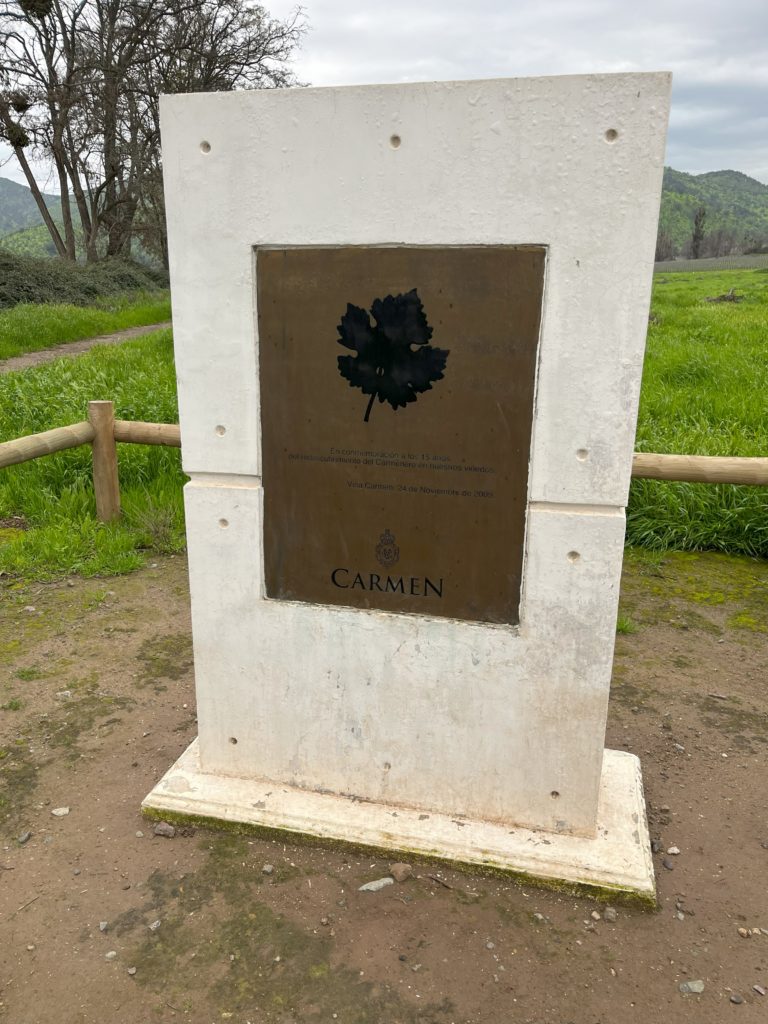
    When in Maipo, I went to one of the oldest wineries in the country, Viña Santa Rita, and after a short carriage ride among the vineyards, we got to the plaque that marks the place where Carménère was re-discovered.

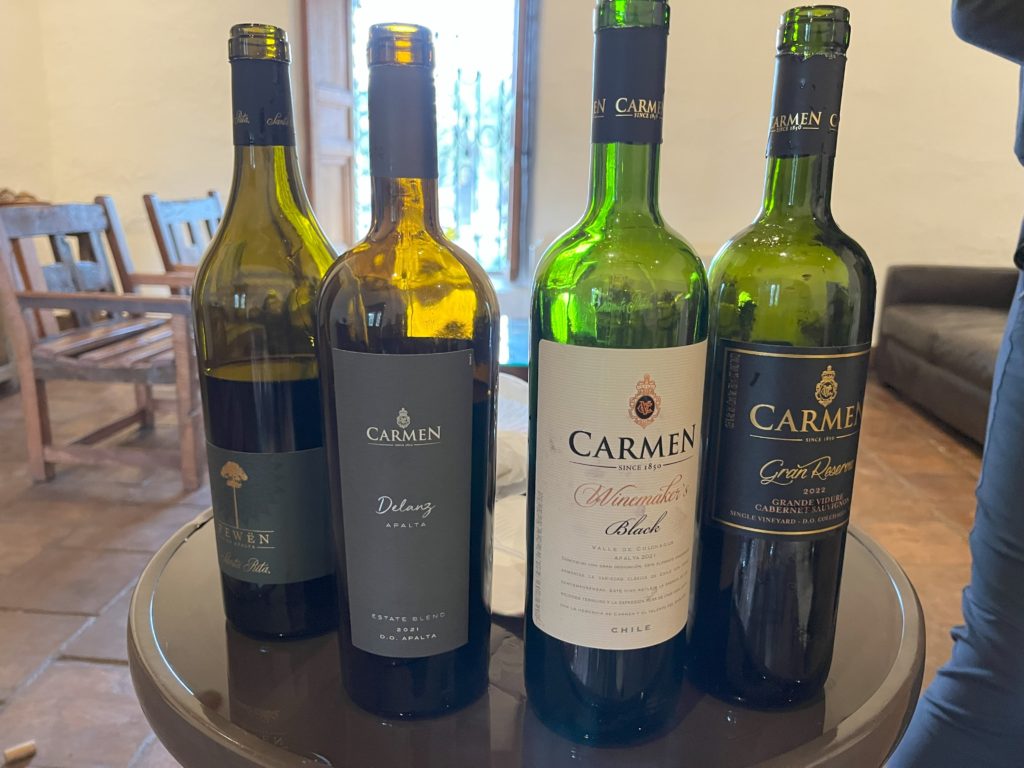
    I then tasted 4 different kinds of Carménère, mostly from their premium collections (including their top notch Pewën).

    I personally feel that, wine speaking, Chile is a misunderstood country. The country is the 4th largest wine exporter in the world but what they export is definitely not their best expression. Chile is often misunderstood in the wine world. Despite being the fourth-largest wine exporter, its best wines rarely leave the country.

    If you’re planning a wine trip to Chile and you are interested in knowing where to find the best wines in Chile, email me at sipwithcarlotta@gmail.com: I’ll tell you where to find the best Carménère tastings and authentic Chilean wine experiences.

    [All photos were taken during my Carménère tour at Viña Santa Rita in September 2023. For more information about the tour: https://santaritaonline.com/tour/carmenere/]

  • Italy vs. Baja California: a story of similarities and contrasts

    Italy vs. Baja California: a story of similarities and contrasts

    Mexican wine is on the rise, especially in California and the U.S. wine market thanks to proximity and curiosity. But what’s the connection between Mexico and Italy in the world of wine?

    Like all New World wine regions, Mexico discovered grapes during the colonization period, from 1520 onward. Primarily Spanish varieties were brought into the country by the conquistadors and by missionaries afterwards.

    But the country is today a melting pot of other European grape varieties like French and Italian, imported mostly by immigrants. In fact, it’s not until the beginning of 1900 that modern winemaking truly took off in Valle de Guadalupe, which today accounts for 85% of Mexican wine production.

    Among the firsts to open a winery there was the Italian immigrant Angelo Cetto in 1926, who is now responsible for half the country’s total wine production with his L.A. Cetto Winery. He was followed by another Italian, Camillo Magoni, in 1965 who started collaborating with L.A. Cetto to grow Nebbiolo in Baja and who now has its own winery too –the famous Casa Magoni.

    Another Italian that is now a star in Valle de Guadalupe is Paolo Paoloni with his 38-hectare Villa Montefiori that includes vineyards, a tasting room and a hotel since the 90s.

    Yes, because if in 2006 there were less than 25 wineries in Mexico, today the number is over 150. And if you count hotels and restaurants we go up to 400 structures.

    But how does Mexican wine taste like, especially compared to the Italian wine?

    We have recently organized a wine event in collaboration with Vino Migrante and All About Baja Wines in San Diego to compare Italian varieties with the same Mexican varieties.

    [With Veronica Carrillo of All About Baja Wines]

    Generally speaking, weather in Mexico is hotter because closer to the tropics, although it’s still possible to grow grapes because the climate is dry. The results were revealing: Mexican wines tend to be full-bodied, riper, and more alcoholic, while Italian wines remain fresher and higher in acidity.

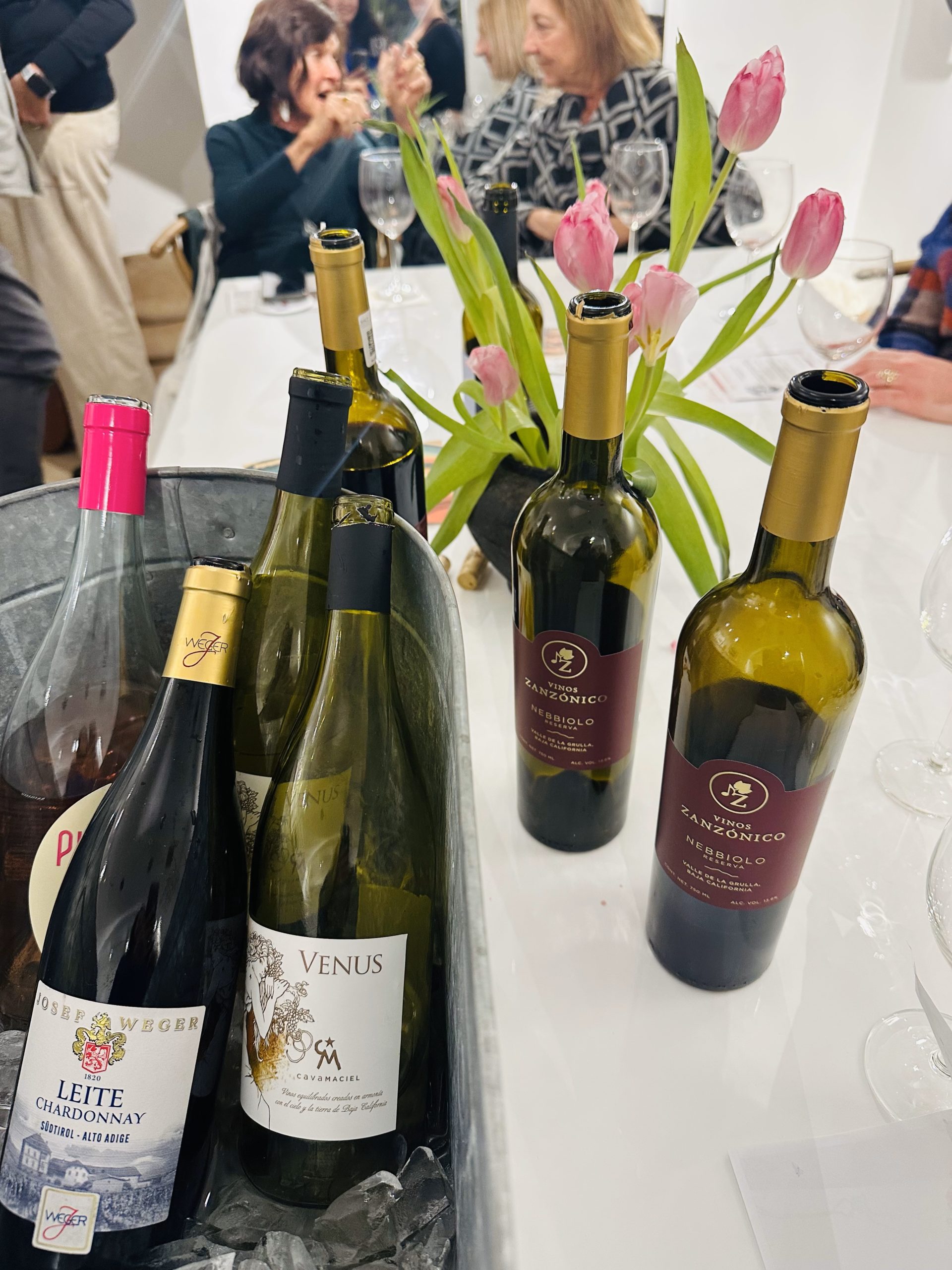
    Let’s take a Chardonnay for instance. It’s a very adaptable grape, meaning it can grow both in a cool and warm climate. But the flavor profile will be different. During the event we tasted Wegerhof Leite Chardonnay DOC vs Cava Maciel Venus Blanco. The first one that comes from Trentino Alto Adige has a bright acidity and citrus notes whereas the Mexican Chardonnay is fuller body and developed more tropical flavors.

    Also the winemaking techniques are different in the two countries. Italian winemakers prefer cleaner and fresher wines, with less use of oak in the cellar. During the event we compared Alpi Retiche Nebbiolo IGT vs Zanzonico Wines Nebbiolo. The first Nebbiolo from Lombardia feels very light in the mouth with notes of fresh red fruits and herbs. Grapes were in fact fermented in stainless steel tanks and then aged both in cement and neutral large casks. Zanzonico Nebbiolo is definitely a bolder wine and since it was aged for 24 months in new oak barrels you get all those aromas of vanilla and smoke that kind of overpower the fruit and cut the acidity.

    Wine in Mexico is definitely a younger industry compared to Italy but in the past 10 years they have made so many progresses! That’s why it’s becoming a really popular wine destination.

    Bravo!

    If you want to know more about going wine tasting in Mexico, send me an email to sipwithcarlotta@gmail.com. We are also promoting a public wine tour in collaboration with Vino Migrante on March 2nd 2025: https://www.eventbrite.com/e/1225537117509

  • Screw cap, to love or not to love

    Screw cap, to love or not to love

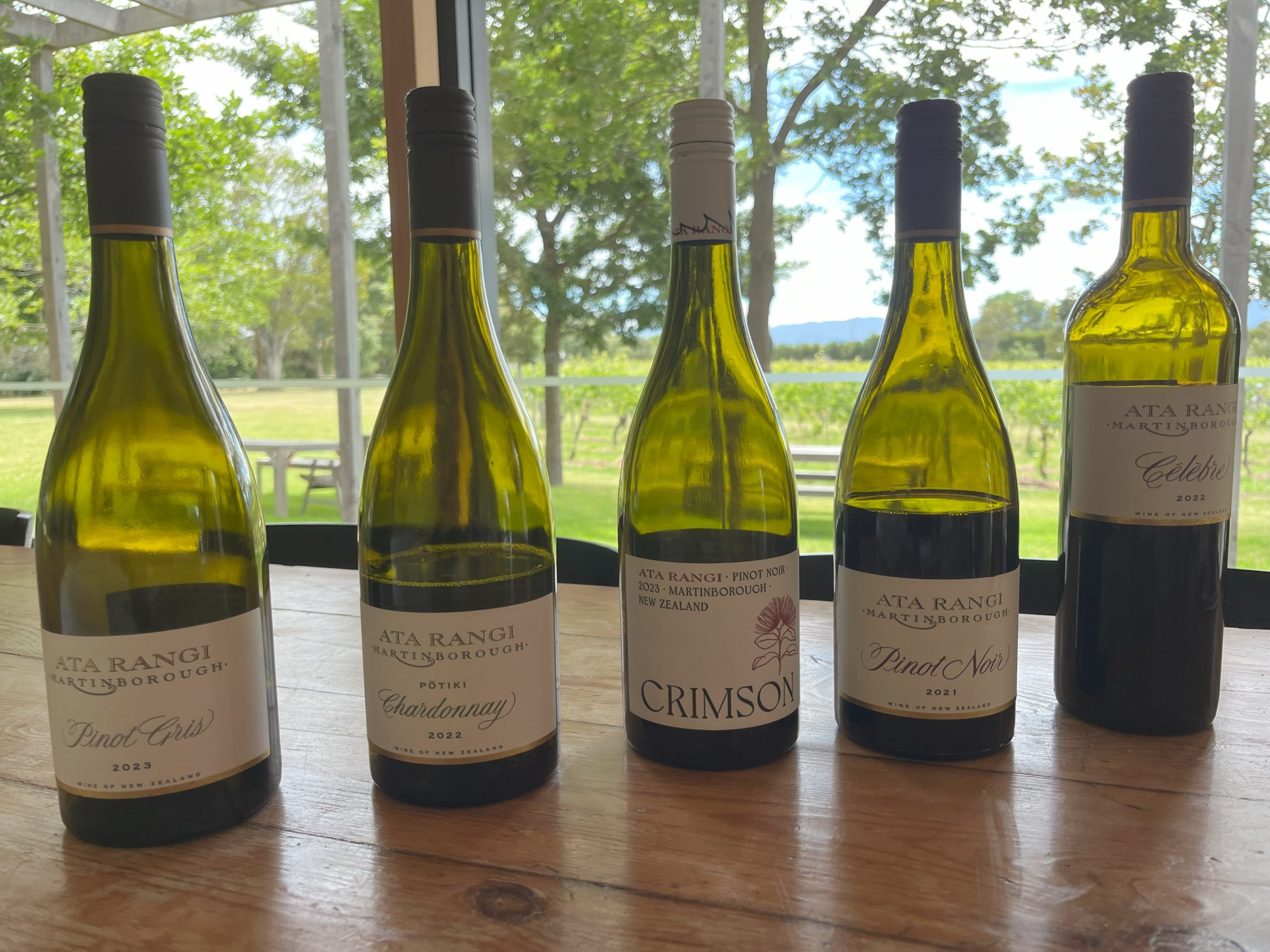
    During my recent wine trip to New Zealand, I discovered that nearly 90% of wine bottles are sealed with screw caps, not just in supermarkets or casual wine bars, but even in top notch wineries and fancy restaurants. That got me wondering: are screw caps good or bad for wine?

    One thing is certain: screw caps are more sustainable, cost-effective, and easier to open and close. They also prevent common wine faults such as cork taint, a defect that can ruin wine aromas and flavors.

    The pioneers of the screw cap movement were Australian winemakers in 2000, when a group from Clare Valley bottled their entire Riesling production under screw caps. A year later, New Zealand winemakers followed their path by establishing the New Zealand Screwcap Wine Seal Initiative.

    Scientific studies and blind tastings revealed that wines sealed with screw caps tasted not only as good as those sealed with corks, but often fresher, more consistent, and free from faults.

    The main debate revolves around wine maturation – that period of time when the wine matures and changes in the bottle to develop new flavors and soften up. Supporters of cork claim it allows the wine to “breathe,” letting in oxygen for a smoother evolution. However, screw cap advocates argue that oxygen exposure is unnecessary: in fact, the absence of oxygen keeps wine stable and fresh for longer.

    While Australia and New Zealand are leading the way, the United States and Europe remain a bit skeptical, often for aesthetic and traditional reasons, such as how it will affect service at the restaurant.

    But trends are shifting: today, over 30% of global wine bottles use screw caps, and we will see this trend grow more and more in the future.

    If you’re planning a wine tasting with wines from New Zealand, keep an eye on the events section and get ready: you might be surprised by their freshness and balance!

    [Photo taken by Ata Rangi in Martinborough, New Zealand, during my Pinot Noir tasting experience]